Crutches
Filter and sort















Crutches: Choosing the Right Type, Size and Fit
Underarm vs. Forearm Crutches: What’s the Core Difference?
Choosing between underarm and forearm crutches can feel confusing. Let's make that choice clear. One is built for short-term recovery and easy adjustment, while the other is designed for comfortable, everyday mobility.
Underarm Crutches: For Recovery
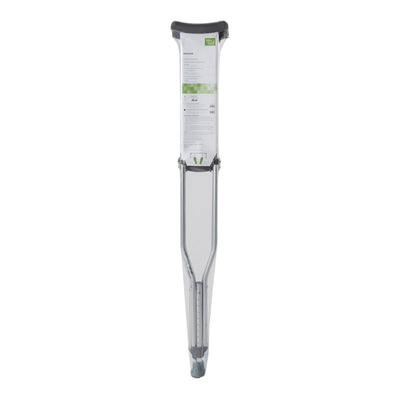
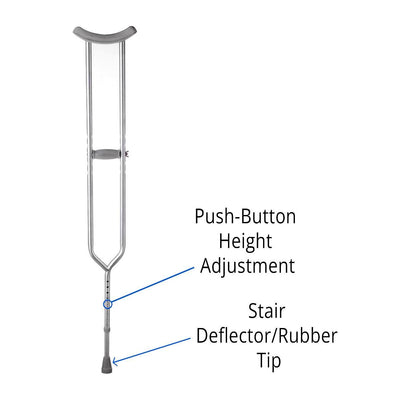
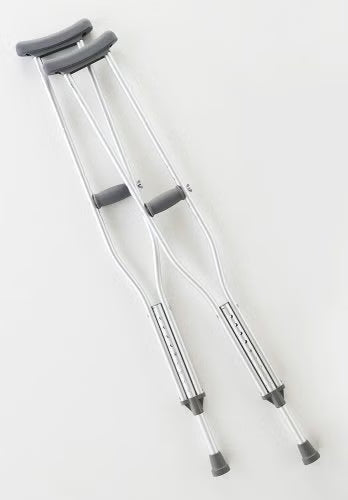
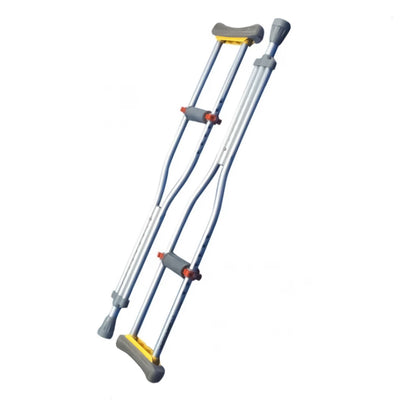
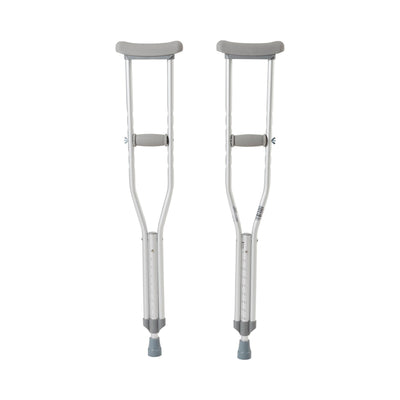
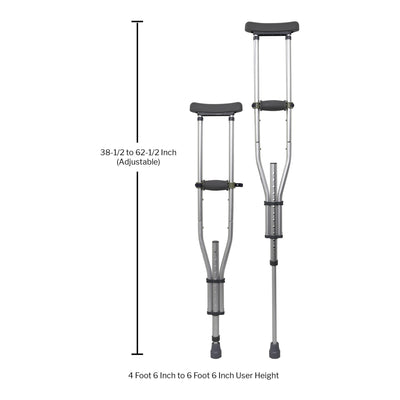
Underarm crutches, also called axillary crutches, are the classic choice after an injury or surgery. Padded top pads rest against your side while your hands carry the weight on the grips. Height adjusts with simple push-pins, so one pair can fit users across a wide height range, making them a practical choice for temporary use.
Forearm Crutches: For Everyday Movement
Forearm crutches use a cuff that wraps your forearm and a hand grip below it. This leaves your hands free for short moments, such as opening a door, and many people find them easier to move with indoors and in tight spaces. Contoured, vinyl-coated cuffs keep the fit secure and comfortable, which is why they are often chosen for longer-term use.

Guidance for Your Specific Task
The height range and weight capacity listed on each product tell you exactly who it is built for. Here is how to choose.
For Healing: Injury & Short-Term Recovery
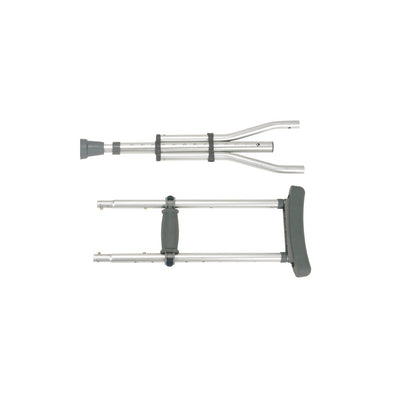
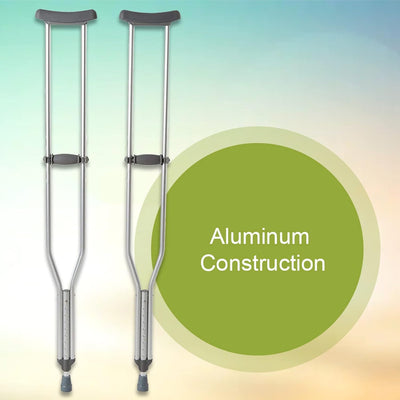
If you need support for a few weeks while you heal, underarm crutches are the simple, adjustable option. Match your height to the range on the product page and confirm the weight capacity before you order. Many aluminum models are lightweight and fold or adjust quickly. Your healthcare provider can show you how to set the height and use them safely.
For Daily Use: Long-Term Mobility
When you will be on crutches every day, comfort matters most. Forearm crutches with contoured cuffs and soft grips reduce pressure points and feel steadier on longer walks. Pick the size that matches your height, since forearm crutches come in youth, adult, and tall adult options.
For Added Capacity: Bariatric Support
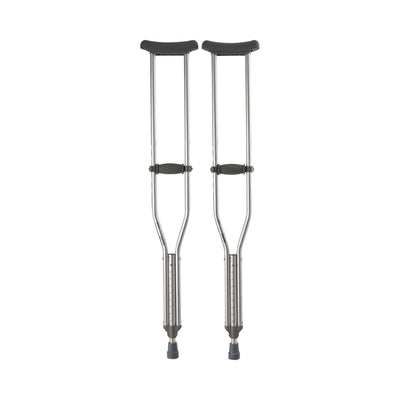
If you need a higher weight capacity, choose a heavy-duty model built for it. Bariatric crutches use reinforced steel construction, and many also come in tall sizes. Always check the capacity listed for your exact size before ordering.
Frequently Asked Questions
How do I choose the right crutch height?
Start with your own height and match it to the range listed on the product. Crutches adjust in small steps, so you can fine-tune the fit. Your healthcare provider or physical therapist can confirm the right setting for you.
What is the difference between underarm and forearm crutches?
Underarm crutches have a padded top that rests near your side. Forearm crutches have a cuff around your forearm. Underarm styles are common for short-term recovery, and forearm styles are often chosen for everyday, longer-term use.
What does weight capacity mean?
It is the maximum user weight a crutch is rated to support safely. It varies by model, so check the capacity listed on the exact product and size you are buying.
Are there crutches for children?
Yes. We carry pediatric and youth sizes, including underarm crutches for shorter users and children's forearm crutches. Check the user height range on each listing.
Do I need to replace the rubber tips?
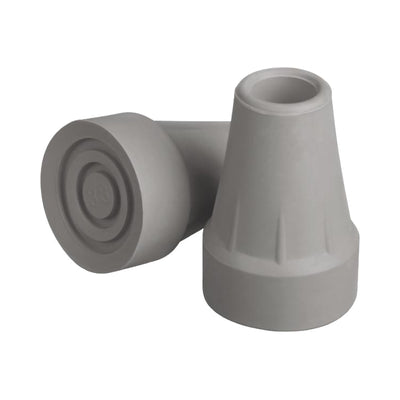
Worn tips reduce grip and stability. Replace them when the tread looks smooth or cracked. Heavy-duty crutch tips are available in this collection.
Find the Right Fit with Confidence
We’ve sourced trusted, professional-grade crutches and accessories to help you move safely and comfortably during recovery and beyond.
Satisfied with my product it was a speedy delivery and it was exactly what I wanted no surprises aside from the excellent service I received
Verified Buyer
I walk with crutches daily, and have for 60+ years. Guardian tips are the ones I always use. They last.
Verified Buyer


