
Allergy Season Is Rough on Your Lungs. Here's the $27 Thing Most People Are Missing.
The cool breeze, drifting leaves, and vibrant reds and oranges announce the arrival of fall. A season we wait for all year long. Not only does it mark the beginning of festivities, it also brings with it the dreaded allergies. Before you know it, two weeks of October are gone. When kids should be out riding their bikes, they're stuck indoors nursing a headache and itchy eyes. Instead of taking a peaceful walk in the evening, we resort to spending our time behind sealed windows, staring at empty streets and falling leaves.
And for a lot of families, it goes further than that. The cough that shows up around bedtime. The wheeze on the way home from school. The rescue inhaler that lives in a coat pocket from September to November.
But it doesn't have to be this way. A little preparation before the season hits can save the whole season, and it doesn't require a fortune.
Remember: This information is here to help you learn and explore, but it's not a substitute for professional medical advice. For any medical advice, diagnosis, or treatment, please consult with a doctor or other qualified professional.
Meet the AeroChamber Plus® Z STAT® with ComfortSeal® Mask. Here's the part most people never hear: when you use an inhaler on its own, a large share of every dose never reaches the lungs at all. It hits the back of the throat, coats the tongue, and gets swallowed. You get the bitter taste. You don't get the full benefit.
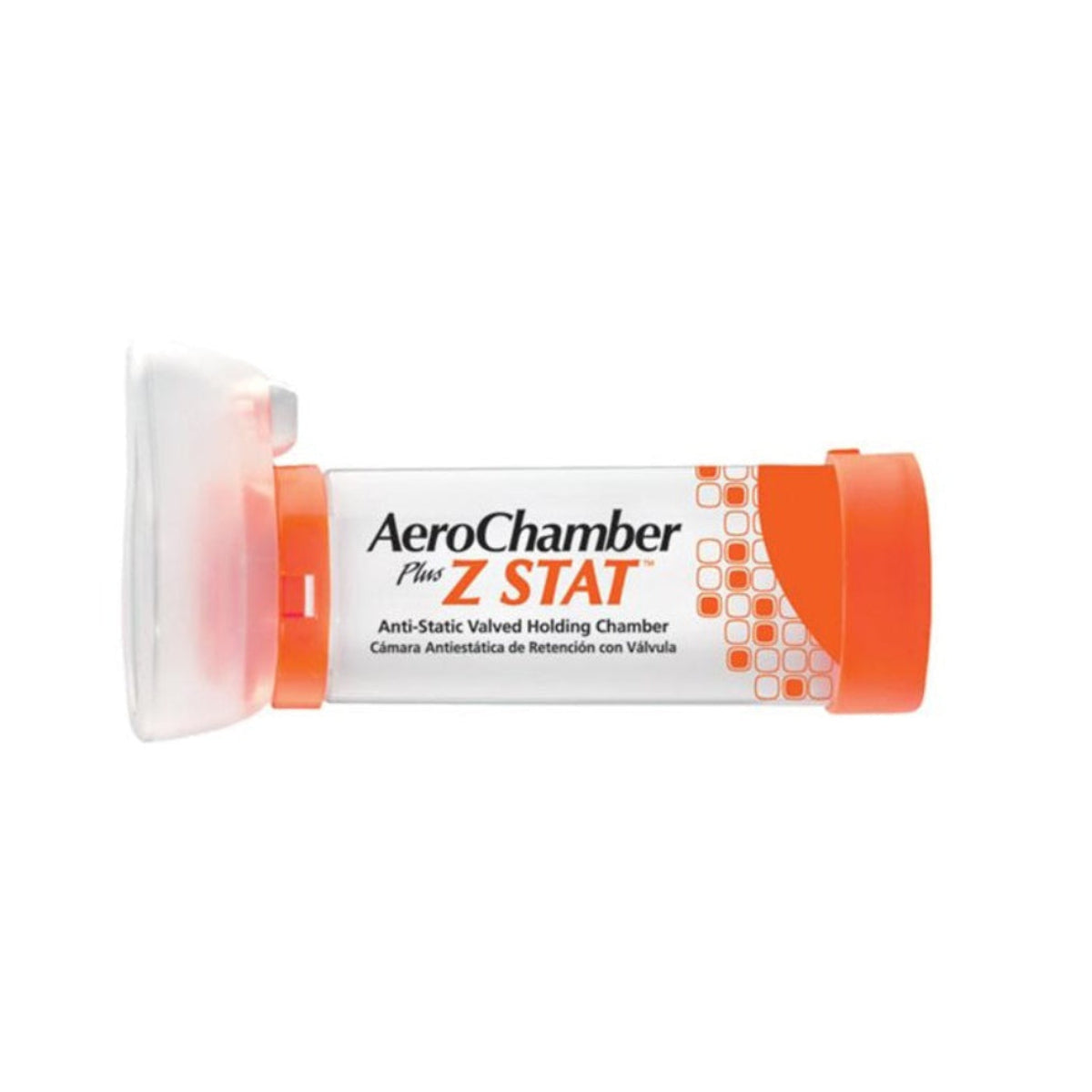
Aerochamber Plus® Z Stat with ComfortSeal® Small Infants and babies up to about 18 months. Shop Now |
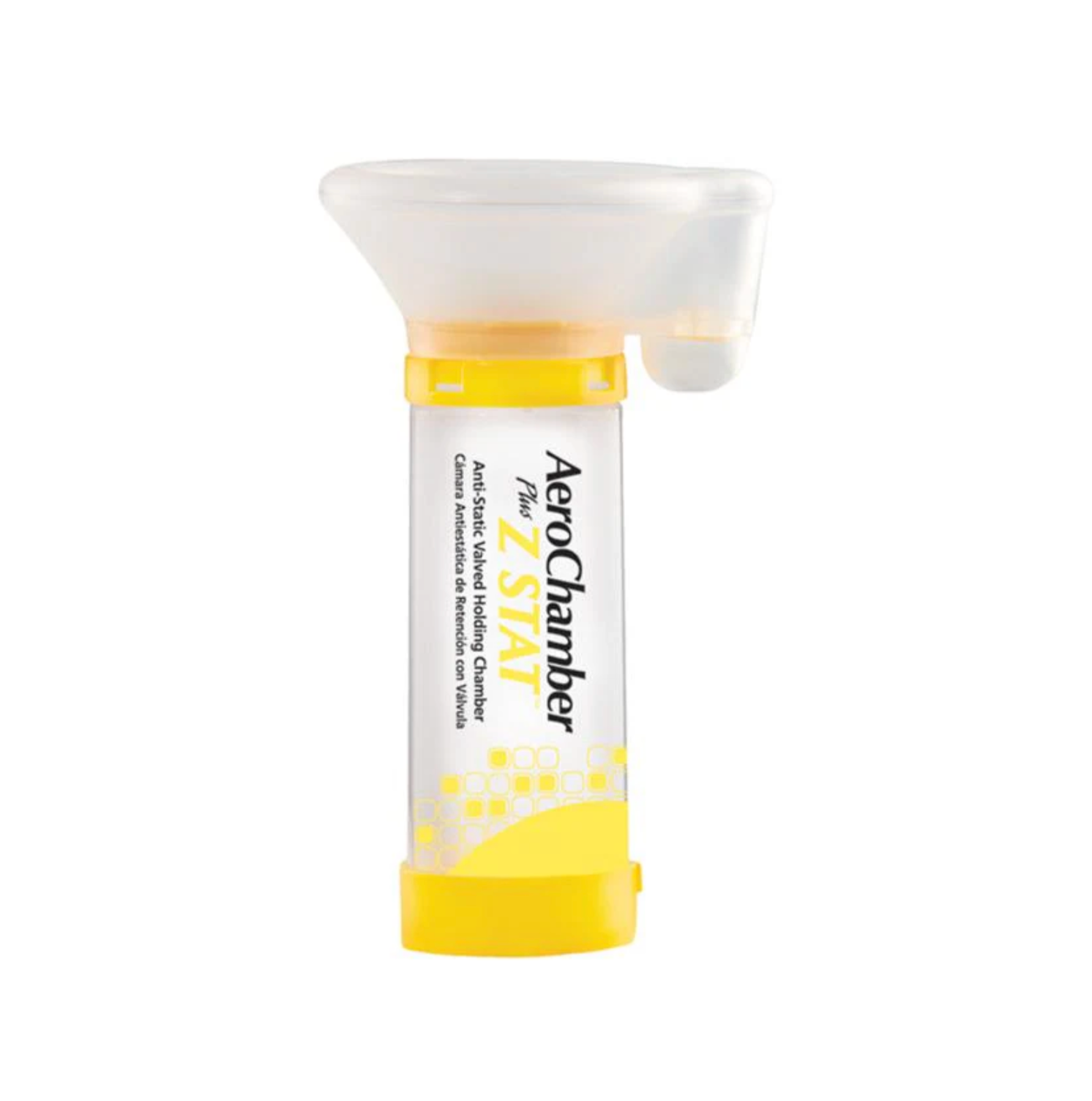
Aerochamber Plus® Z Stat with ComfortSeal® Medium Older children, roughly ages 1 to 5. Shop Now |
Aerochamber Plus® Z Stat with ComfortSeal® Large Older kids, teens, and for adults. Shop Now |

A small, inexpensive solution sitting in nearly every hospital and clinic in the country, and it makes each dose of the medication you're already paying for work a lot harder.
Why allergy season hits the airways so hard
Seasonal allergens cause sneezing and itchy eyes. Wrong. While that may be true for a small number of people, most, especially kids, suffer from inflammation in their airways. Pollen, mold spores, dust mites, and pet dander are among the most common triggers for allergic asthma, which is why so many families see their inhaler use spike in April and October.
Frequent use of inhalers becomes a way of life. Pressing the canister and inhaling at exactly the right moment is difficult for adults and close to impossible for a child who is not only upset but also struggling to breathe during a coughing spell.
A spacer removes the coordination problem entirely.

What a valved holding chamber actually does
The valved holding chamber sits between the inhaler and the mouth. A single spray releases the dose into the chamber, where the medication stays suspended instead of firing straight at the back of the throat. That feeling of medication hitting the throat and coating the tongue with a bitter taste is exactly why kids fight the inhaler and adults put off using it. With this device, the user breathes the dose in at their own pace, slow and steady, with no split-second timing to get right.
That means more medication where it belongs and less of it wasted. Given what inhalers cost, that's not a small thing.
What makes the AeroChamber Plus® Z STAT® the one to get
Not all spacers are equal, and a few details on this one matter more than the marketing usually explains:
- Anti-static chamber. Cheap plastic spacers build up a static charge that pulls medication particles onto the chamber walls, where they do exactly nothing. The Z STAT® uses an anti-static polymer, so it delivers consistently right out of the package with no priming ritual required.
- See-through chamber. You can actually watch the medication mist sitting in there. When you're medicating a squirming toddler at 2 a.m., visual confirmation that the dose fired is worth a lot.
- ComfortSeal® mask. The soft silicone contours to the face and seals snugly, which limits ambient air leaking in around the edges. A leaky mask means a diluted dose, and this is the single most common reason a mask spacer underperforms.
- Flow dynamic valve and baffle system. Keeps exhaled breath out of the chamber, so any remaining medication is still there and available for the next breath.
- Universal pMDI adapter. The backpiece fits the commonly prescribed metered dose inhalers, so you're not hunting for a device that matches your specific prescription.
- Whistle feedback. If the user inhales too fast, the device whistles. It's a built-in coaching tool, and kids tend to turn "don't make it whistle" into a game.
It's also the chamber most recommended by the leading metered dose inhaler manufacturers, and it's the same device stocked in hospitals and pediatric clinics. Our customers point this out constantly in reviews: it's identical to what the doctor's office hands you, at a fraction of what the pharmacy charges to fill it as a prescription.
Picking your size
Each unit is color-coded, which makes it easier to distinguish when buying multiple sizes or finding the right fit.
- Small — orange mask. Sized for infants and babies, up to about 18 months. The smaller profile is what lets you get a real seal on a tiny face.
- Medium — yellow mask. The right fit for older kids, roughly ages 1 to 5. This is the size most families end up needing.
- Large — blue mask. Built for older children, teens, and adults, and the right pick for anyone who struggles with a mouthpiece or simply feels more secure with a mask. Great for seniors too.

Remember: the mask needs to cover the nose and mouth completely and sit flush against the skin, with no gaps at the edges. A good seal keeps outside air from leaking in and diluting the dose. If you or your child can reliably close lips around a mouthpiece, usually suitable for those over age five, you can also choose the AeroChamber Plus® Z STAT® mouthpiece version instead, which skips the mask entirely.

How to use it (with the mask)
- Take the caps off the inhaler and the chamber, and glance inside the chamber to make sure nothing's fallen in.
- Insert the inhaler mouthpiece into the rubber backpiece of the chamber.
- Shake the inhaler and chamber together for a few seconds.
- Place the mask over the nose and mouth, pressing gently for a complete seal with no gaps at the edges.
- Press the inhaler once to release a single puff.
- Have them breathe normally, in and out, for about six breaths. Keep the mask on the face the whole time. Don't lift it between breaths.
- If more than one puff is prescribed, wait, shake again, and repeat from step 4.
- If it's a steroid preventer inhaler, rinse the mouth afterward (or wipe a baby's face and give them a drink) to help prevent thrush.
How to use it (without the mask)
Using the mouthpiece version instead? Same setup, except the user seals their lips around the mouthpiece, breathes in slowly and deeply over three to five seconds, and then holds their breath for up to ten seconds before exhaling.
When to wash it, and how

Wash it once a week if it's in daily use, and sooner if anyone's been sick or the chamber starts looking cloudy or sticky. Regular cleaning keeps medication residue from building up on the valve and walls, and it also keeps dust mites and mold from setting up shop, which is the last thing you want in a device you breathe through during allergy season.
- Remove the backpiece only. Leave the rest assembled.
- Soak for 15 minutes in lukewarm water with a little liquid dish detergent, agitating gently. Don't scrub with a cloth or brush.
- Rinse in clean water. Alternatively, run it on the top rack of the dishwasher.
- Shake off the excess water and stand it vertically to air dry completely. Do not rub or towel dry, since that reintroduces static and leaves lint behind.
- Reassemble once everything is fully dry.
Never boil it or attempt to sterilize it, and always take the inhaler canister out before washing. Inhalers get cleaned differently, usually without water at all, so check that package insert separately.
When to replace it
The AeroChamber Plus® Z STAT® is designed for 12 months of single-patient use. Mark your calendar when you open it.
Swap it out sooner if you notice any of the following:
- Cracks, warping, or damage anywhere on the chamber or mask
- Cloudiness that won't wash out
- A valve that no longer lies flat or moves freely
- A backpiece that no longer grips the inhaler snugly
- A mask that's lost its shape and won't seal properly
One more thing: these are single-patient devices. If two people in the house need one, they each need their own. Sharing a spacer means sharing everything that grows inside it.
Round out your allergy season kit
A spacer is the highest-value item on this list, but a few other things earn their keep when the pollen count spikes:
- Nebulizers — for younger children or anyone who does better with a longer, gentler treatment.
- Pulse oximeters — a quick, objective reading when you're trying to decide whether a bad night warrants a call to the doctor.
- Incentive spirometers — useful for building lung capacity and recovering after a rough stretch.
- Aerobika® OPEP Therapy System — a drug-free device for clearing stubborn mucus.
Get one before you need it
The best time to buy a spacer is before the season starts, so you're ready rather than scrambling when symptoms flare. These inexpensive spacers last a year and make every dose of an expensive medication work harder.
Keep one in a bag, a car, or a school backpack, and head into allergy season knowing the medication is actually getting where it needs to go.
Shop the AeroChamber Plus® Z STAT® with ComfortSeal® Mask →
This article is for general information and isn't a substitute for medical advice. Always follow the complete instructions packaged with your device and the guidance of your healthcare provider, and seek urgent care for severe or worsening breathing difficulty.


